
Ready to learn about black soldier fly farming?
What is a black soldier fly?
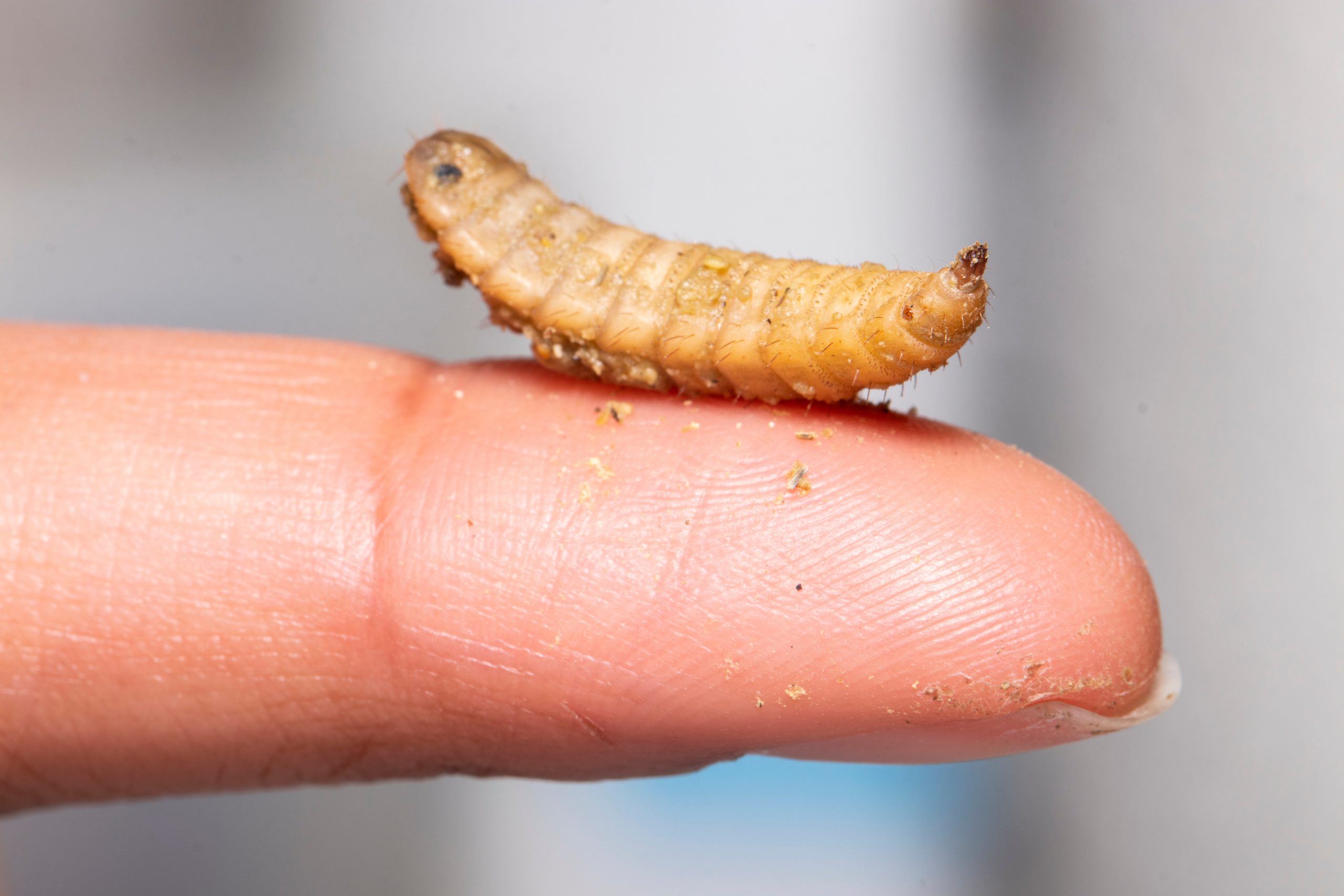
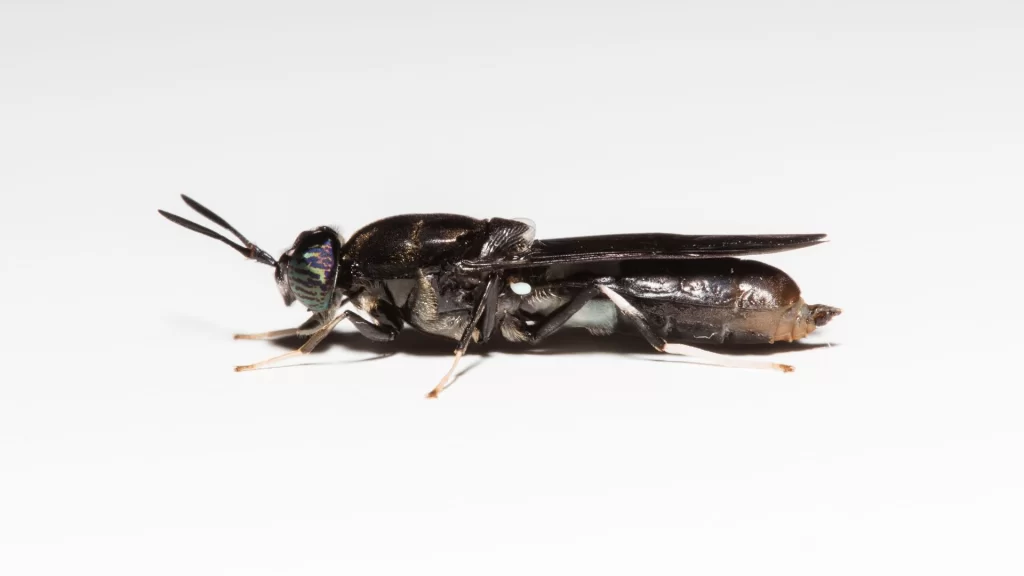
The black soldier fly (BSF), though originally from South America, is now present in multiple continents, including North America, Europe, and Africa. Farmers are increasingly using BSF in agriculture as a source of protein for livestock, as fertilizer for crops, and as a method of waste management.¹
Life cycle and characteristics
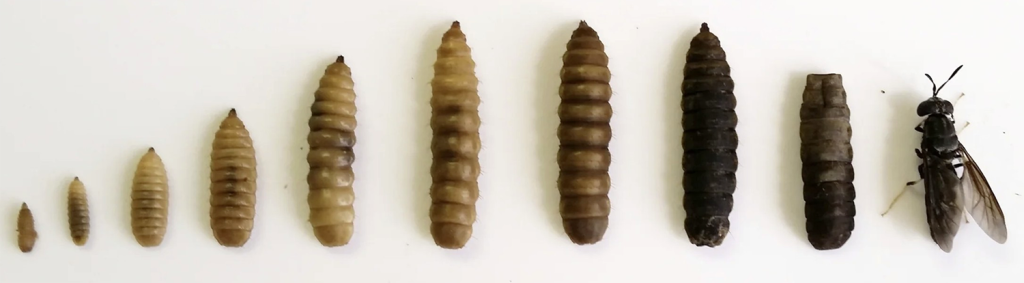
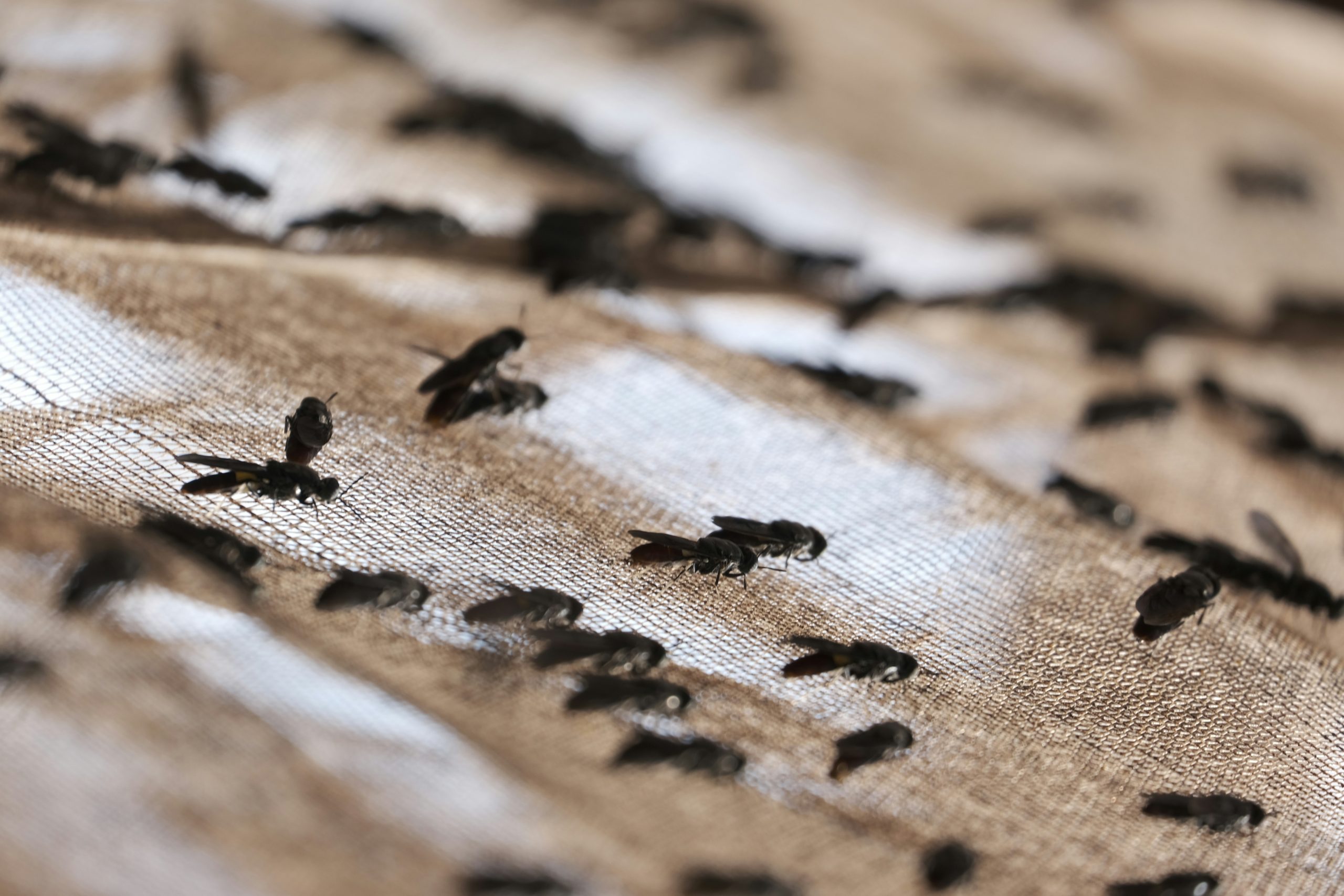
BSF start their life cycle after hatching from eggs as larvae and progress to a prepupal stage over the course of 3-4 weeks. They then become pupae, characterized by darker color and minimal movement, for 1-2 weeks before becoming an adult fly.²
They are full adult flies for roughly 2 weeks before their life cycle ends. This entire process lasts about 5-6 weeks.²
Though adult BSF ressemble wasps, they have not shown the ability to sting or bite. Additionally, they have not proven a threat to crops or local ecosystems, and they haven’t been shown to carry diseases like mosquitoes do, for example.³
The Circular Agriculture of BSF Farming
A key component of BSF farming is its ability to create a circular agricultural system. This means that the farming system is less reliant on external inputs to maintain production, potentially decreasing input costs for farmers and reducing waste.
BSF larvae (BSFL) have the ability to convert waste into protein. They can reduce many types of waste, including livestock manure, fruit and vegetable scraps, kitchen waste, and excess parts of livestock.⁴ Their ability to consume food waste has the potential for significant environmental benefits.⁵
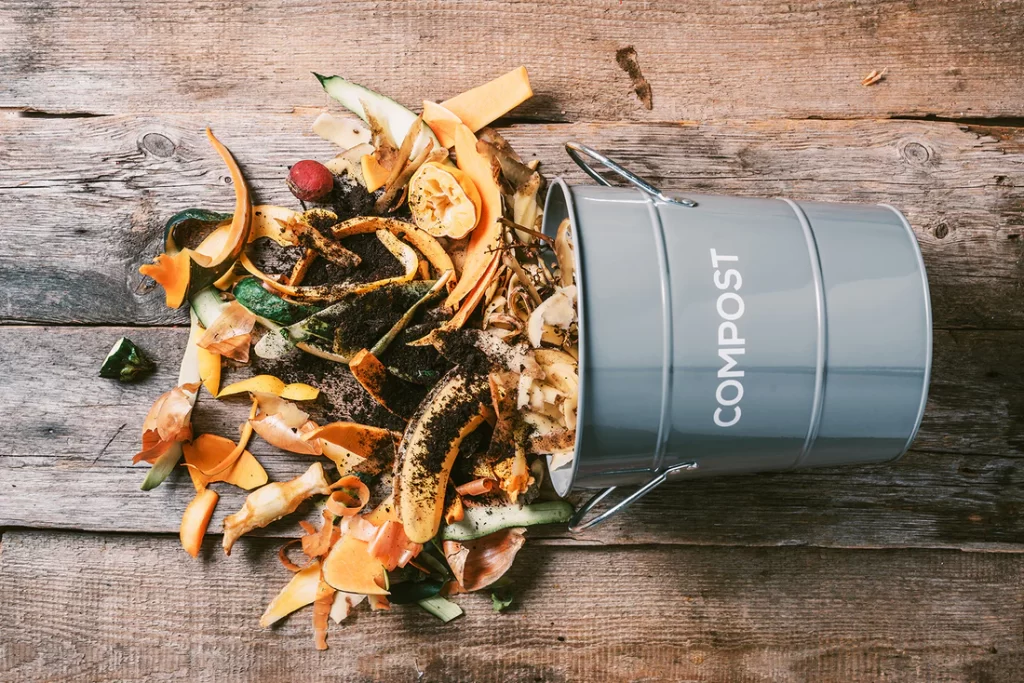
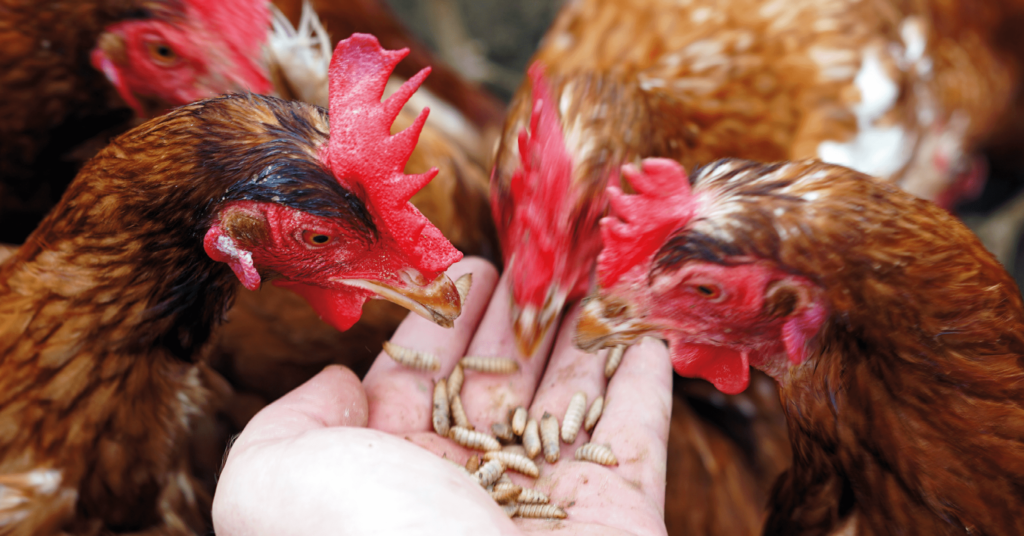
BSFL can then be harvested and used for many different purposes. BSFL offer a high source of protein for livestock, such as poultry, fish, and pigs.⁶ Additionally, BSF frass, a combination of substrate and waste, can be used as fertilizer for crops.⁷ BSFL can also be used for off-farm purposes, such as in pet food or biodiesel.¹
The Fun Facts of Black Soldier Fly Farming
Environmental sustainability
BSF farming can reduce overall waste by reusing organic waste to create protein. Using insect protein for animal feed could create less reliance on land-intensive protein sources such as soy.⁸ BSF frass also offers a nutrient-rich fertilizer that can reduce the need for chemical fertilizers.⁷
Small-scale farmers
BSF farming has potential benefits specifically for small-scale farmers. By creating a circular agricultural system, BSF farming has the potential to reduce a farm’s dependence on external inputs, which can often be costly for smaller operations.⁹
Efficient farming
BSF experience relatively quick growth during their larval period, when they are harvested as a protein source. BSF larvae contain roughly 40-60% crude protein, with development to harvestable size taking 2-3 weeks.¹⁰ For comparison, crickets, another common source of insect protein, contain about 60-70% of crude protein, with development taking 5-8 weeks.¹¹
What you can find on this website…
Current Research
Discover ongoing BSF research from universities and organizations.
Hands-on Tutorials
Access step-by-step tutorials with videos and pictures describing how to set up a BSF operation.
Community Engagement
Connect with fellow farmers who are interested in BSF farming and find associations that can help you learn more.
Have questions?
Our team is happy to help you with any BSF-related questions!
Footnotes
- Kashif ur Rehman et al., “Black Soldier Fly, Hermetia Illucens as a Potential Innovative and Environmentally Friendly Tool for Organic Waste Management: A Mini-Review,” Waste Management & Research: The Journal for a Sustainable Circular Economy 41, no. 1 (June 22, 2022): 81–97, https://doi.org/10.1177/0734242×221105441.
- D. Bruno et al., “Bugbook: Life Cycle, Reproduction, and Morphofunctional Characterisation of the Gut, Fat Body, and Haemocytes in the Black Soldier Fly,” Journal of Insects as Food and Feed 11, no. 18 (May 21, 2025): 289–316, https://doi.org/10.1163/23524588-20250002.
- Yu-Shiang Wang and Matan Shelomi, “Review of Black Soldier Fly (Hermetia Illucens) as Animal Feed and Human Food,” Foods 6, no. 10 (October 18, 2017): 91, https://doi.org/10.3390/foods6100091.
- T. T. Nguyen, J. K. Tomberlin, and S. Vanlaerhoven, “Ability of Black Soldier Fly (Diptera: Stratiomyidae) Larvae to Recycle Food Waste,” Environmental Entomology 44, no. 2 (February 26, 2015): 406–10, https://doi.org/10.1093/ee/nvv002.
- R. Salomone et al., “Environmental Impact of Food Waste Bioconversion by Insects: Application of Life Cycle Assessment to Process Using Hermetia Illucens,” Journal of Cleaner Production 140 (January 2017): 890–905, https://doi.org/10.1016/j.jclepro.2016.06.154.
- Sharvini Siva Raman et al., “Opportunities, Challenges and Solutions for Black Soldier Fly Larvae-Based Animal Feed Production,” Journal of Cleaner Production 373 (November 2022): 133802, https://doi.org/10.1016/j.jclepro.2022.133802.
- Fazilah Abd Manan et al., “Unlocking the Potential of Black Soldier Fly Frass as a Sustainable Organic Fertilizer: A Review of Recent Studies,” Journal of Environmental Management 367 (September 2024): 121997, https://doi.org/10.1016/j.jenvman.2024.121997.
- M. Heuel et al., “Black Soldier Fly Larvae Meal and Fat Can Completely Replace Soybean Cake and Oil in Diets for Laying Hens,” Poultry Science 100, no. 4 (April 2021): 101034, https://doi.org/10.1016/j.psj.2021.101034.
- Barragán-Fonseca, Karol B, Julián Cortés-Urquijo, Julián Pineda-Mejía, Diego Lagos-Sierra, and Marcel Dicke. “Small-Scale Black Soldier Fly-Fish Farming: A Model with Socioeconomic Benefits.” Animal Frontiers: The Review Magazine of Animal Agriculture 13, no. 4 (2023): 91–101. https://doi.org/10.1093/af/vfad030.
- Bongisiwe Zozo et al., “The Nutritional Quality and Structural Analysis of Black Soldier Fly Larvae Flour before and after Defatting,” Insects 13, no. 2 (February 4, 2022): 168, https://doi.org/10.3390/insects13020168.
- Shahida Anusha Siddiqui et al., “Acheta Domesticus (House Cricket) as Human Foods ‐ an Approval of the European Commission ‐ A Systematic Review,” Food Frontiers 5, no. 2 (January 18, 2024): 435–73, https://doi.org/10.1002/fft2.358.